Toyota Matrix 2003-2008 pros and cons, common problems
By Vlad Samarin, Updated January 27, 2024
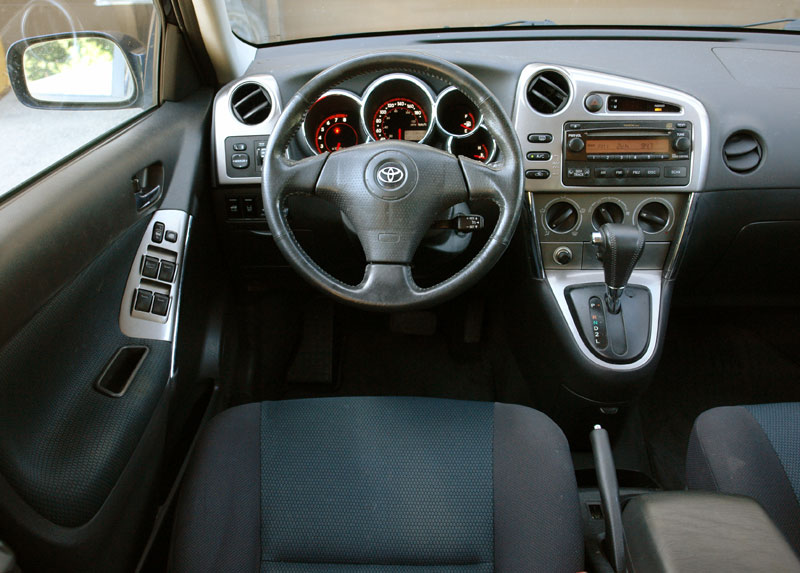 2005 Toyota Matrix interior
Rear seats fold down flat, offering 53.2 cu. ft. of cargo space covered with plastic with built-in attachments for tie-downs. The front passenger seatback flips forward, if you want to haul long items.
The tailgate window opens separately for easy access. A 115V power outlet is among the available options. Overall, it's a great little car, but not without problems. We will start with pros and cons.
Pros:
- Versatile Hatchback Design: The Toyota Matrix features a practical hatchback design, providing versatile cargo space, easy loading and flat cargo floor.
- Fuel Efficiency: The Matrix offers a fuel-efficient 1.8-liter engine that is a cost-effective choice for daily commuting and long drives.
- Reliability: Toyota's reputation for reliability extends to the Matrix, making it a dependable option for used car buyers.
- Handling: With responsive steering and a compact size, the Matrix provides nimble handling, making it suitable for urban driving.
- Re-sale value: The Matrix holds its value well and is easy to sell.
- Affordable: Not only the initial price is low, but the maintenance is reasonably cheap. Even if the engine or the automatic transmission need to be replaced, used units are not too expensive.
Cons:
- Interior Quality: The interior materials and build quality may not be as refined as some competitors in the same class.
- Road Noise: Some drivers and passengers note that the Matrix can be prone to road noise, especially at higher speeds.
- Outdated Technology: Compared to newer models, the Matrix's technology features are outdated, lacking modern connectivity options.
- Cramped Rear Seats: While the Matrix offers good cargo space, rear-seat passengers may find the space a bit cramped on longer journeys.
2003-2008 Toyota Matrix Reported Problems:
In general, the Matrix is a reliable car. Common problems include a bad water pump, bad starter motor, Check Engine light issues, suspension and driveline problems, oil leaks, minor engine problems, as well as issues with a manual transmission. Let's look at some of the problems.A leaking intake manifold gasket or can cause the Check Engine light to come on with the codes P0300-P0304, P0133 and P0171. Replacing the intake manifold gasket may cost $120-$280 in a repair shop. The service bulletin EG045-07 describes the repair.
A contaminated or failed air flow sensor can also cause the code P0171. The airflow sensor ($120-150 for OEM part) is easy to replace.
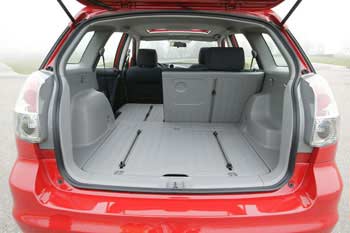 Toyota Matrix 2005. Photo: Toyota Canada
The code P0441 could be caused by a bad gas cap, although the Evap system will have to be tested to confirm it.
A failed starter motor will cause the car not to start. The starter might produce a single click, but will not run. The starter motor will need to be replaced. Read more about the starter motor. Replacing a starter motor will cost from $250 to $420; it's a fairly simple job.
There are a number of reports about problems with a manual transmission due to a faulty bearing.
Harsh shift condition with the MIL light ON and the code P2716: recommended repair involves replacing the ECM (engine computer) with an updated part.
There was also a recall for a faulty ECM in 2005-2008 Toyota Matrix.
Summary:
The Matrix is a simple reliable wagon. It's hard to think of any other vehicle that is as practical and fuel efficient at the same time. The Matrix can last for over 200,000 miles with good maintenance. We recommend the automatic transmission since the manual is known to have problems. The Pontiac Vibe is a mechanical twin of Toyota Matrix and can also be considered. The Honda Fit, although smaller is another good choice for a fuel-efficient car with decent cargo space. The Fit is also reliable.Similar cars:
Ford Focus 2000-2011
Mazda 3 2004-2009
Honda Civic 2006-2011
Toyota Matrix 2009-2014
Pontiac Vibe 2003-2010
Toyota Corolla 2009-2013
Mechanical: The 2003-2008 Matrix comes with front- or all-wheel drive, and a choice of manual or automatic transmission.
Advertisement
Fuel Economy: The 2005-2008 1.8L (1ZZ-FE) Toyota Matrix automatic is rated at 25/31 mpg city/highway. This means you can travel up to 396 miles (637 km) on one 13.2-gallon (50-liter) tank of gas.
Handling and ride: Toyota Matrix offers sharper handling and firmer ride compared to the Corolla. The base 1.8L engine is not very quick, but works fine in day-to-day driving.
Safety: In the NHTSA frontal crash tests, the 2003-2004 Toyota Matrix received five stars for both the driver and the front passenger.
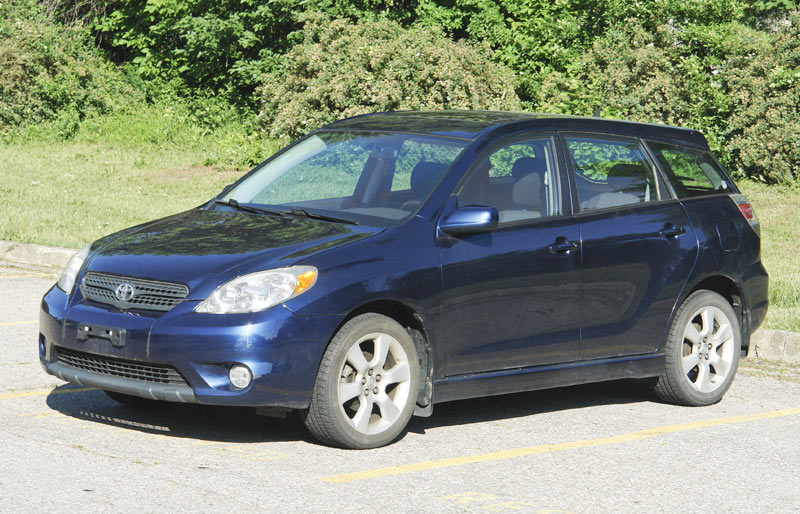 2005 Toyota Matrix.
 What to look for when buying a used Toyota Matrix: When inspecting a used Toyota Matrix, check the oil level; a low oil level could be an indication that the engine consumes oil. Watch out for engine noises. If the engine makes a loud rattling noise or there is a smoke from the exhaust when the engine is started, avoid the car. During the test drive, watch out for noises from a manual transmission; there are plenty of complaints about manual transmission problems. Read more: How to inspect a used car - illustrated guide. Before buying, have the car inspected by a mechanic of your choice. Read also: What mileage is OK for a used car?
Maintenance: How often should you change your oil? Toyota recommends changing your oil every 5,000 miles or 6 months, whichever comes first. If you want to keep your engine in good shape longer and given that it's quite common for the 1.8L engine to consume some oil, we recommend changing your oil every 3,500-4,000 miles. It's also a good idea to check the engine oil level regularly. SAE 5W-30 is the recommended oil viscosity.
A cabin filter needs to be replaced every 24 months or 20,000 miles.
What is the recommended interval to change automatic transmission fluid? Automatic transmission fluid should be checked regularly and changed when dirty. See how to check automatic transmission fluid.
The Toyota Matrix is a lightweight car; if you want better traction on snowy roads, consider installing winter tires.


 © Samarins.com 2000–2024. All rights reserved.