How to inspect a used car - illustrated guide
Updated: January 22, 2020
The used car market is full of great choices. From our experience, all used cars have some flaws or problems. Minor flaws can be dealt with, but cars that have major problems should be avoided. What's the difference?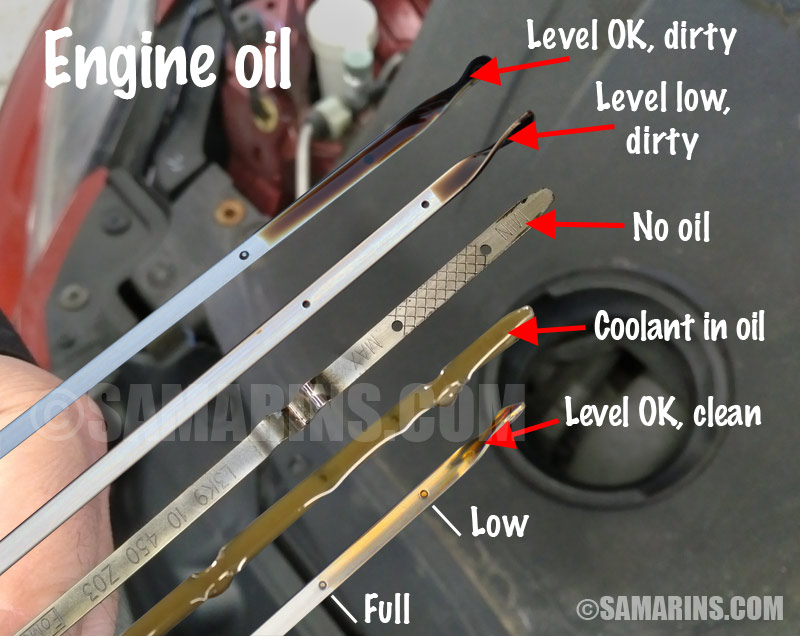 The oil condition on the dipstick can tell a lot.
Minor flaws are the ones that don't affect the safety or reliability of the vehicle or the ones that can be repaired for a reasonable amount of money. Examples of minor problems include worn tires, suspension and brakes problems, noisy wheel bearings, old battery, scratches, dents, upholstery damage, etc.
Marking all minor flaws can help you in the negotiation process. You can request the dealer to repair all issues that you found or to lower the price accordingly.
Major problems include excessive rust damage, frame damage, engine or transmission problems, smoke from the exhaust, airbag and electrical problems, previous serious accidents, flood damage, a lack of maintenance or anything that makes the vehicle unsafe or might require expensive repairs in the future.
We wrote this guide to help you recognize signs of potential problems, make a more informed decision and avoid cars with major problems.
Check used car history report
First, it's a good idea to check the reported history of the vehicle using the VIN number. There are several companies offering paid VIN history reports, Carfax is probably the most popular. The history report may show previous reported accident claims or other issues.If the history report is "clean", it's a good start, but take it with a grain of salt. Not all accidents are reported and the history report will not show you the current mechanical condition of the vehicle. We have seen many used cars with "clean" history reports that in reality undergone some body repairs or had major mechanical problems.
What you may need when checking a used car
It's a good idea to enlist a friend who can help you inspect the car, and consider pros and cons.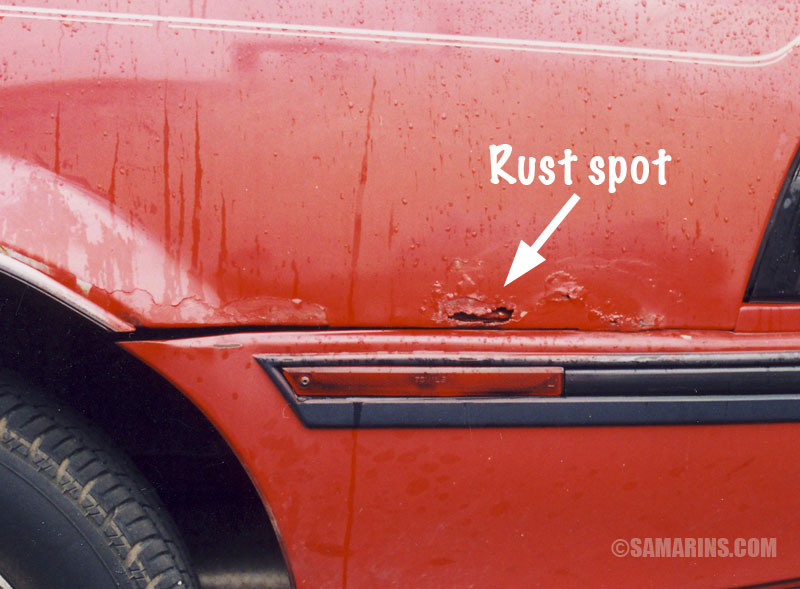 Repaired rust damage.
 If you are using a child seat, it's a good idea to take it with you to see if it fits.
First step: check for signs of accident repairs and rust
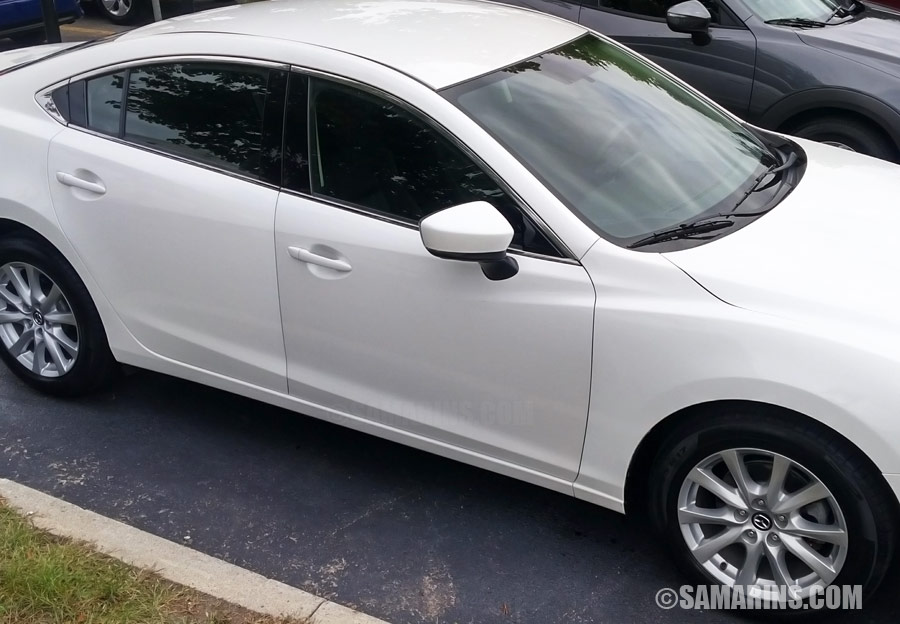 Can you tell what's wrong with this car? Can you tell what's wrong with this car?Yes, you are correct, the front door of this car has been repainted. It could have been some minor damage, but did the dealer tell you about it? Shouldn't the price be lowered because of this? it doesn't look like a quality repair. Mark down any defects you find: cracks on the windshield, dents, damaged lenses, scratched rims, etc. |
Check the exterior lines and reflection
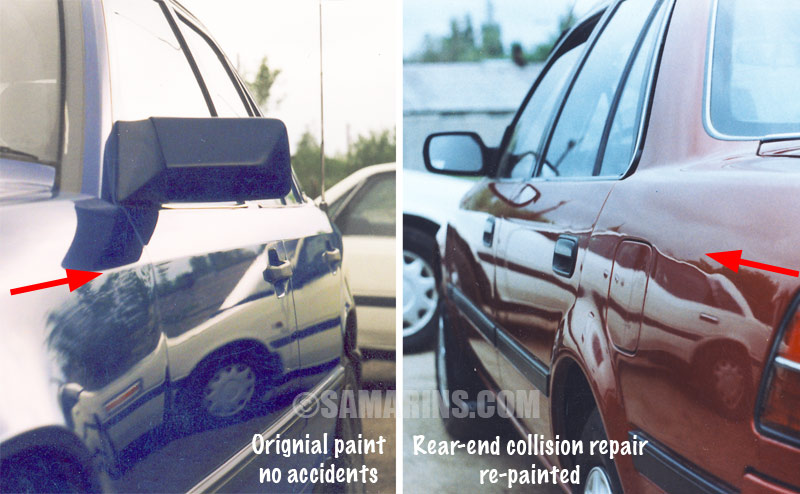 Look at the exterior lines. The car on the right has some waviness after a collision repair. Look at the exterior lines. The car on the right has some waviness after a collision repair.Check if all the doors open and close smoothly. Does the driver's door sag or has free play in the hinges when it's open? Do all the body panels appear lined up? Look closely and compare the texture of the paint on different panels. To help you, we wrote a separate article on this subject and included many more photo examples: Signs of a collision repair, rust or paint job when buying a used car. |
Check the windshield
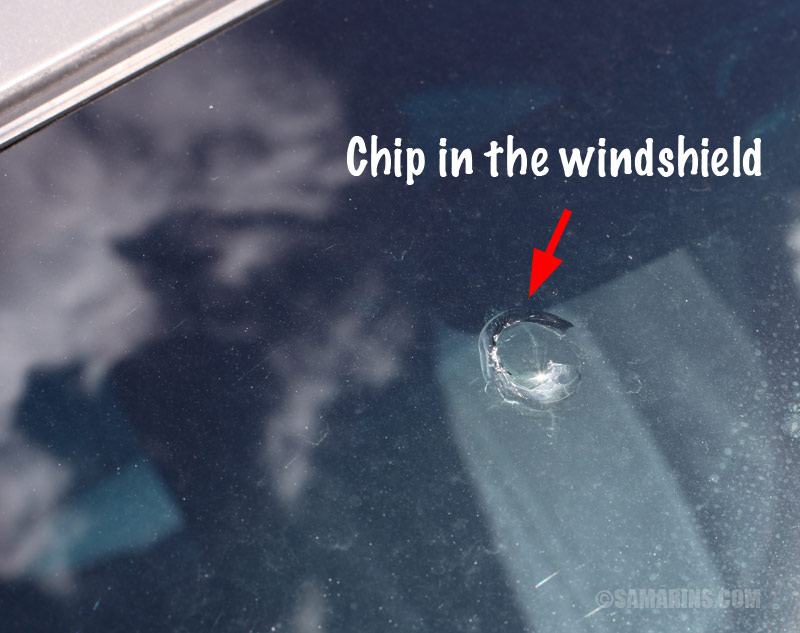 The cracks from this chip might spread later The cracks from this chip might spread later |
Check the sensors in the windshield
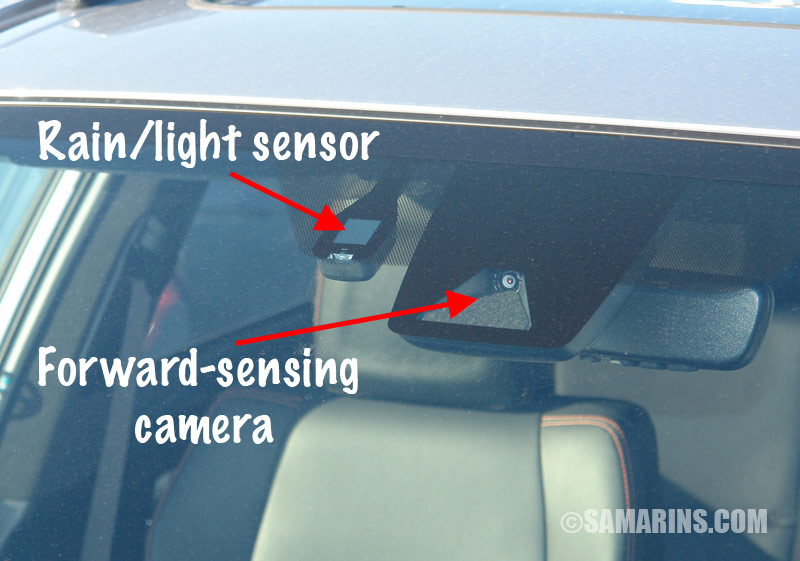 This car has a front-sensing camera and a rain sensor attached to the windshield. This car has a front-sensing camera and a rain sensor attached to the windshield.Watch out for signs of tampering (glue, broken covers, scratches) around the sensors; it may indicate that the windshield has been replaced. If it was not done properly, the car may have problems with the safety systems relying on these sensors. |
Check the rims
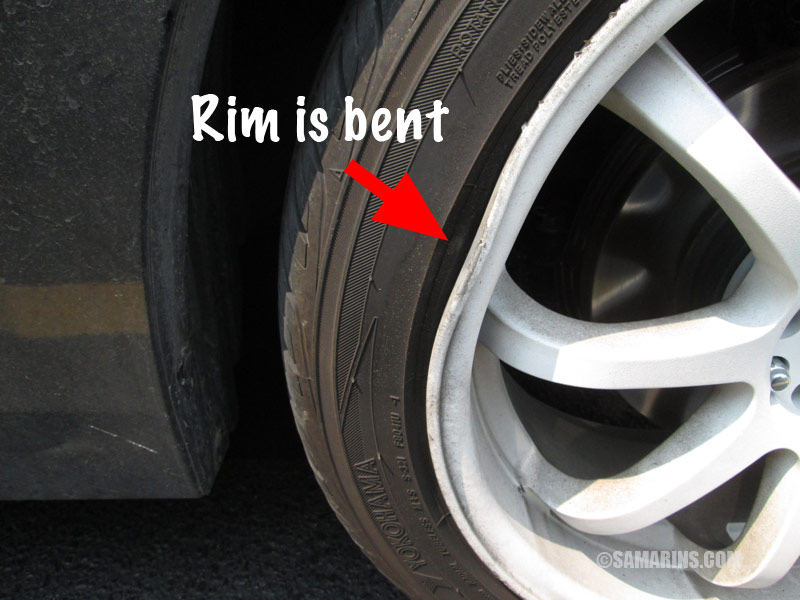 Some aftermarket low-profile rims bent easily. Some aftermarket low-profile rims bent easily. |
Check the manufacturing date of the tires
 This tire was manufactured in the 19th week (May) of 2013. This tire was manufactured in the 19th week (May) of 2013. |
Check tire tread wear
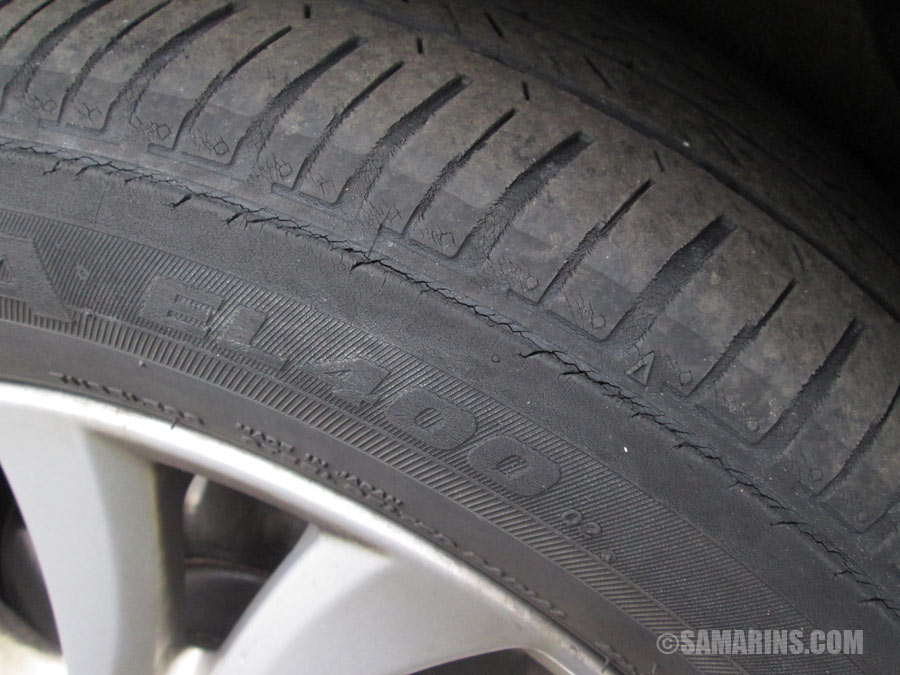
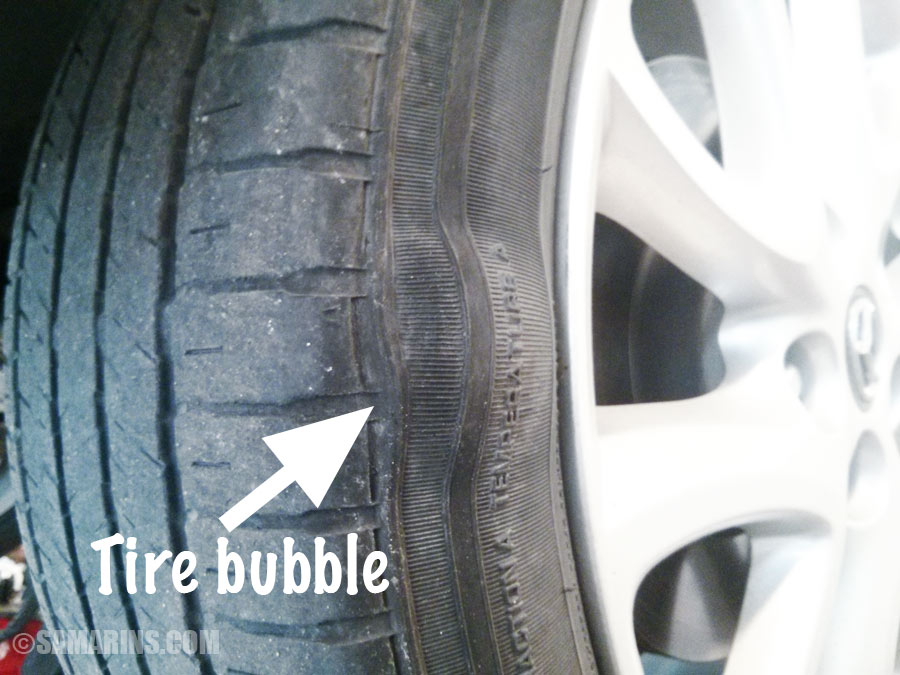
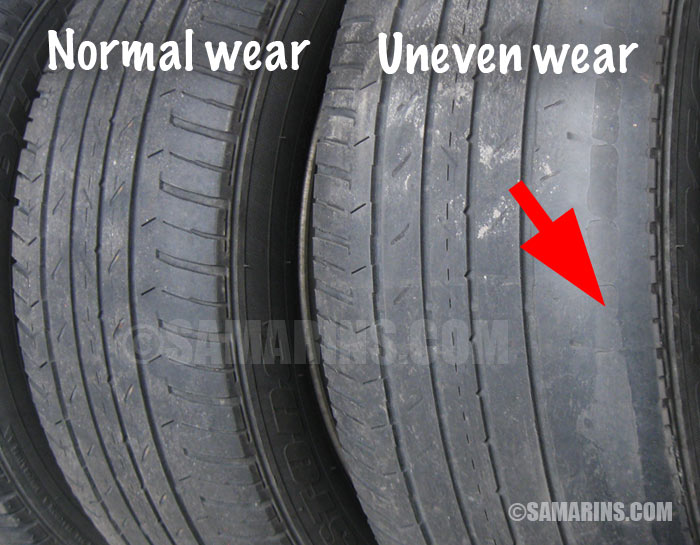
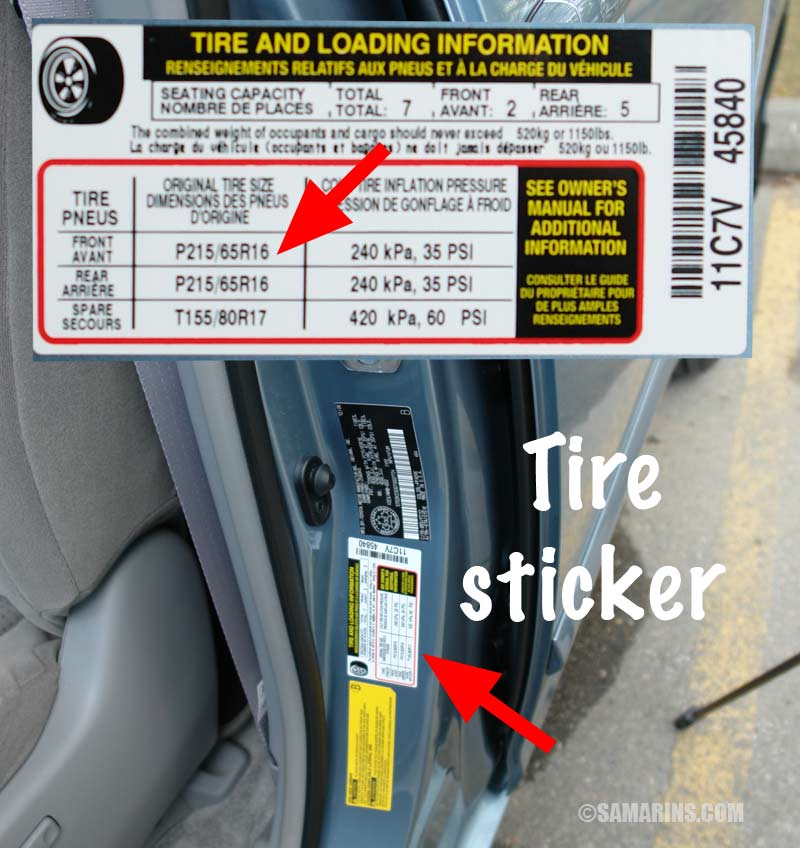
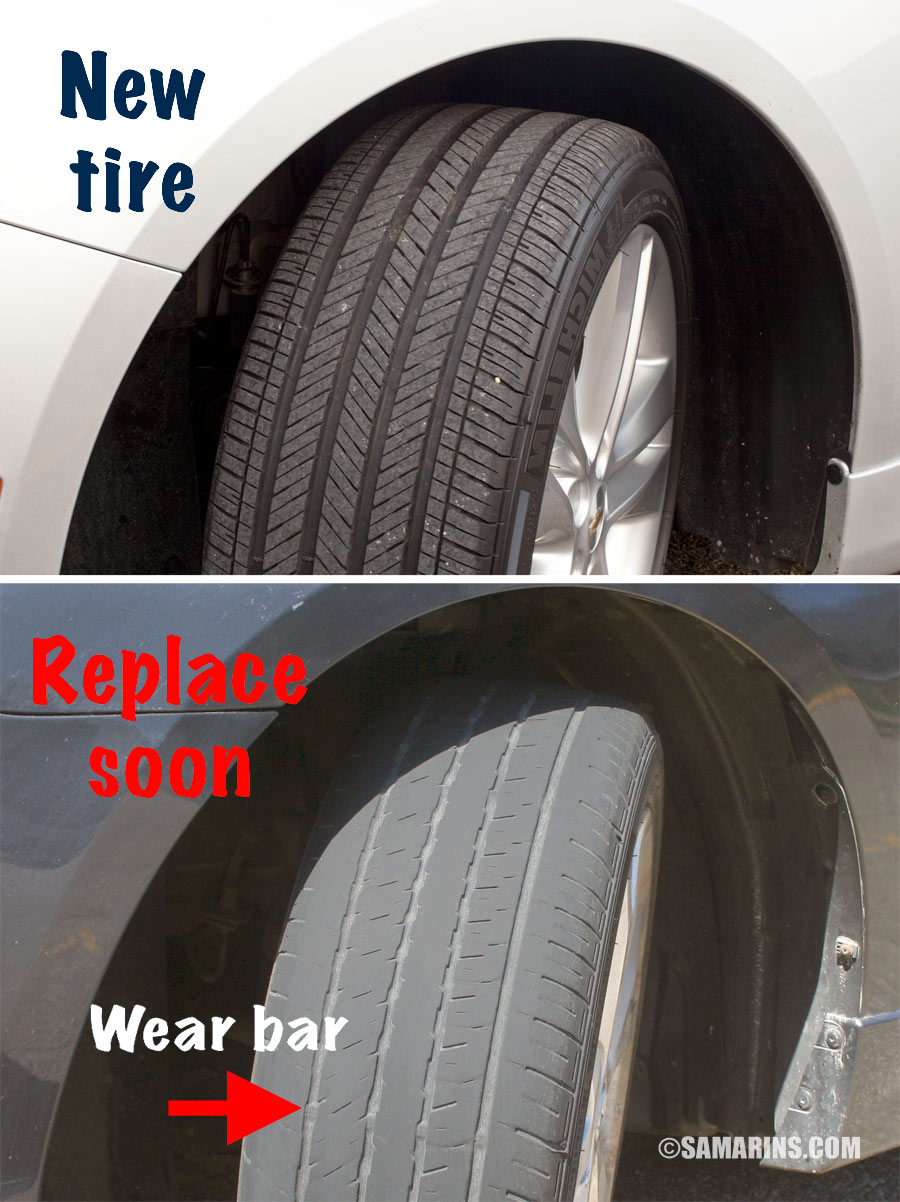 New versus worn-out tire New versus worn-out tireThe tire in the top image is almost new. The new tires have a tread depth from 10/32" to 11/32" and can last for up to 40,000 miles. The tire in the lower photo might still pass the safety inspection, but is worn out to about 4/32", which means this car will need new tires soon. Look at the wear indicator bar. A set of tires, depending on the size and brand costs from $400 to $1400 to replace. Low-profile 18" and larger tires are more expensive. Run-flat tires cost a lot too. You can look up prices at TireRack.com. Are all the tires of the same brand? If the vehicle has expensive premium tires (e.g. Michelin), it's a sign that the previous owner didn't mind spending money to keep the vehicle in top shape. Does the tire size match the size specified in the tire sticker? |
Visual inspection under the hood
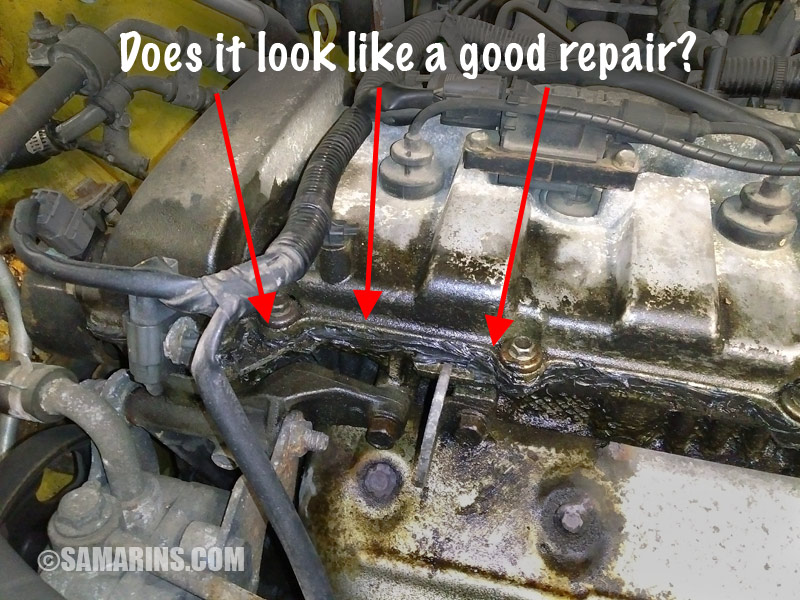
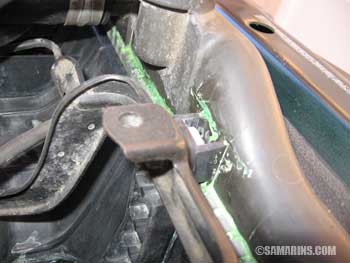 Coolant leaking from a crack in the radiator. Coolant leaking from a crack in the radiator.Watch out for: • Leaks (avoid the car if you notice major leaks). • A burnt oil or antifreeze smell (avoid the car). • Anything that suggests that the car has not been regularly maintained. • Signs of sloppy repairs (avoid the car). • Mods suggesting the car has been raced or otherwise abused If the engine bay looks clean, it doesn't mean that there are no leaks or other problems. Dealers often shampoo the engine before putting the car up for sale. Watch out for leaks underneath the car. Read more: Signs of engine problems when buying a used car. |
How does the battery look?
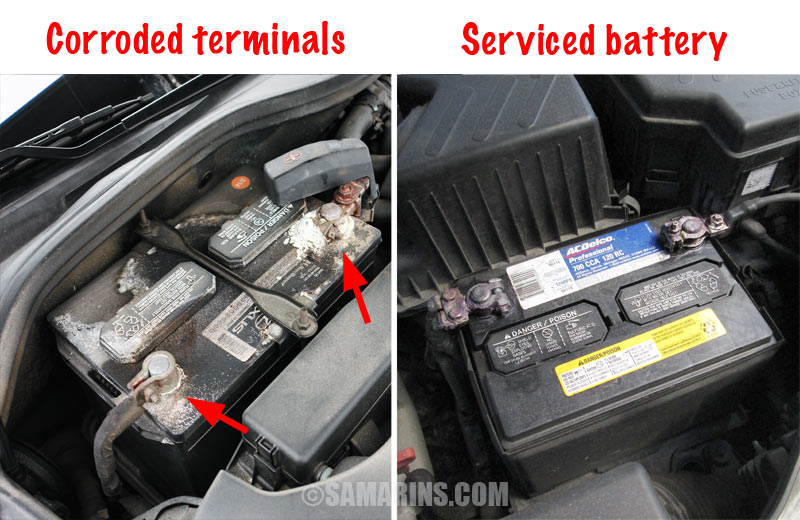 The battery in the left photo looks corroded. The right photo shows the battery that has been recently serviced. The battery in the left photo looks corroded. The right photo shows the battery that has been recently serviced.The car battery typically lasts 5-7 years. Smaller-size batteries last 3-4 years. You can request to check the battery capacity (Cold Cranking Amps) during the pre-purchase inspection. |
Check engine oil level and condition
| The oil condition on the dipstick can tell a lot. Find the engine oil dipstick. Usually it has a bright handle that says" Engine Oil." Pull the dipstick out and check the oil level and condition. If the oil looks very dirty and the oil level is low, it means that either the engine consumes oil or has been poorly maintained. Check the condition of the dipstick itself; if it's covered with black deposits, like the one with no oil in the photo, it's also a sign of an engine in bad shape. If there is no or very low oil on the dipstick, or coolant mixed with oil, avoid the car. Read more: Signs of engine problems when buying a used car. |
Check transmission fluid
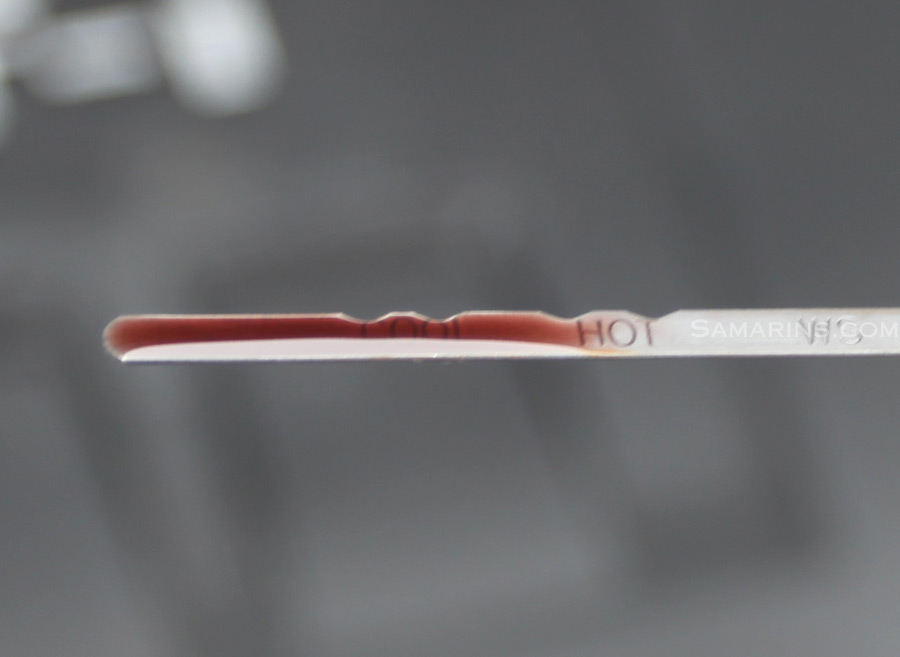 In this car, transmission fluid looks a bit dark, but still clean. The level is OK In this car, transmission fluid looks a bit dark, but still clean. The level is OKTransmission fluid should be clean and transparent. If the transmission fluid looks very dirty, or has a burnt smell, it is a sign of excessive transmission wear. See: How to check transmission fluid. |
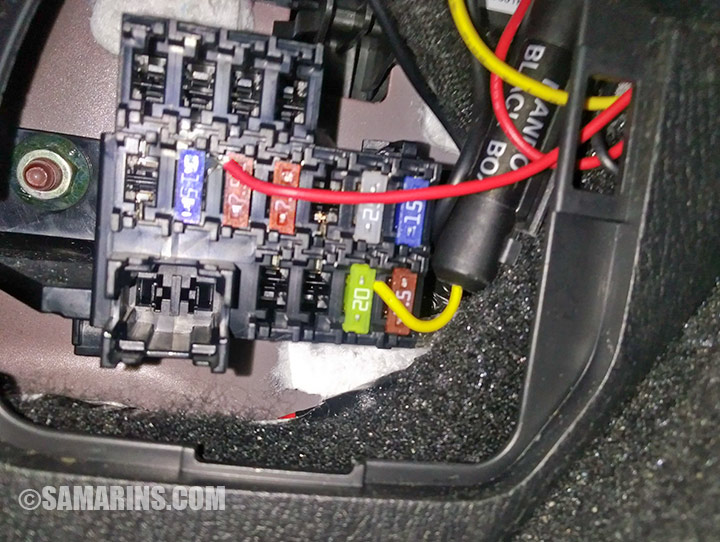
Watch out for signs of sloppy repairs, altered wiring
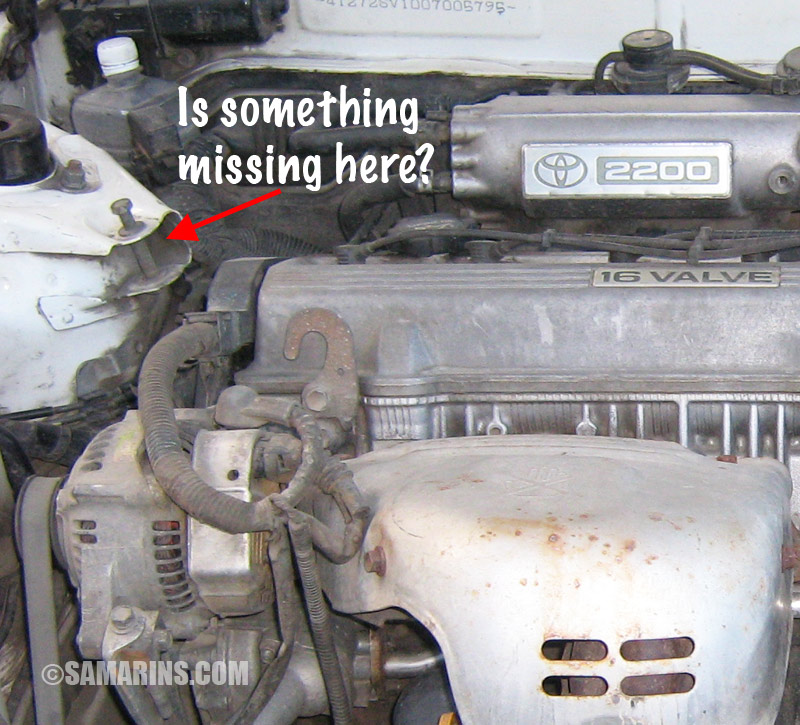 Watch out for sloppy repair job Watch out for sloppy repair job |
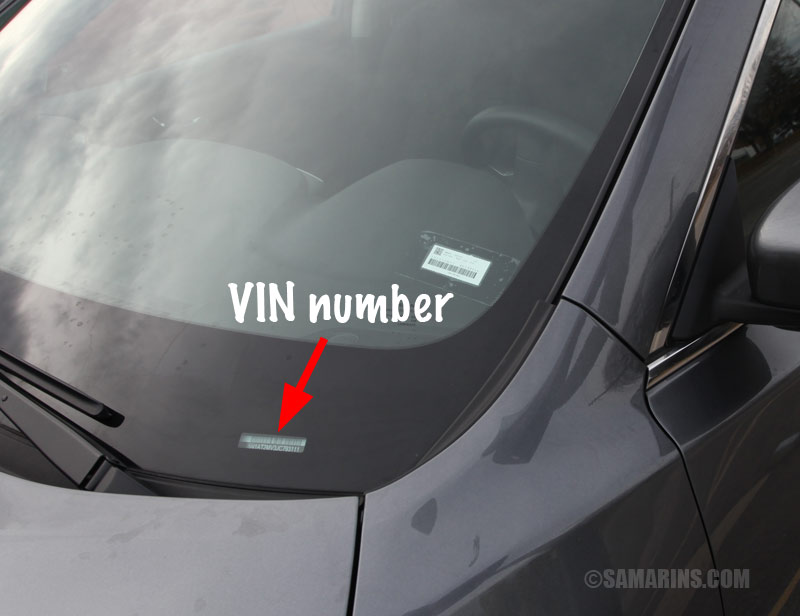
Check the VIN number and the manufacturing date
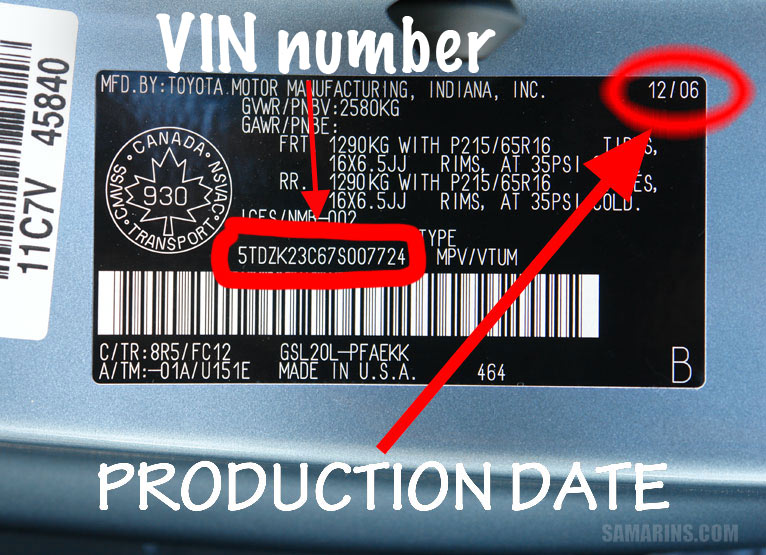 The car is a 2007 model, but it was built in December 2006. The car is a 2007 model, but it was built in December 2006.Make sure the VIN number on the papers matches the one in the car. Watch out for signs of tampering. Check the production date on the VIN sticker. When choosing between two cars of the same model year, one that is built at a later date is a better choice, all else being equal. |
Inside the car:
| Common expensive problems to watch out for: Infotainment system: freezing, rebooting, lack of response in some areas of the touch screen, distorted image of the rearview camera. Instrument panel: warning lights stay on after the engine is started, some gauges are not working properly (e.g. the fuel gauge fluctuates). Seats: heated seat function or some power functions are not working, the seat jams, not moving all the way, the seat base (frame) is loose/broken. Sunroof, power tailgate: not opening/closing fully, sticking, jamming. Heating/Air conditioning: No A/C, the A/C for rear passengers doesn't work, lack of heat from the vents. Do the steering wheel, driver's seat and the inner door handle look worn out? Does it smell bad inside the car? Bad interior odors are difficult to get rid of. Check the condition of the seats. 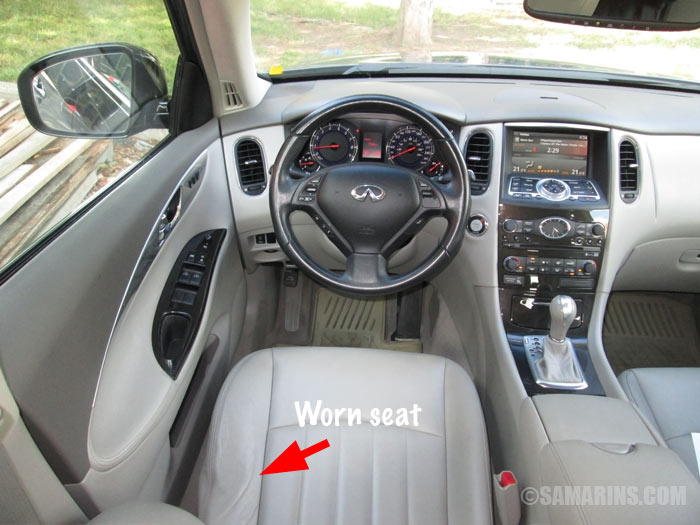 The driver's seat looks excessively worn The driver's seat looks excessively wornMinor damage can be repaired; ask if the dealer can arrange for repairs. Check if both front seats slide and recline. Check the condition of the seat belts. Do you feel comfortable in the driver's seat? Can you find a comfortable position using the steering adjustments? Test power windows, power locks and mirrors. Sometimes a window goes down well, but goes up very slowly or crooked. Loud abnormal noises when a power window is operated indicate a problem. Test the front and rear wipers and washer functions. Take some time to test the infotainment system functions. Try pairing up your phone if that's important to you. See if the rear-view camera provides a clear image. Check if the speakers don't rattle when turning up the volume. Test the heater and air conditioner. With the engine running, turn the A/C on. 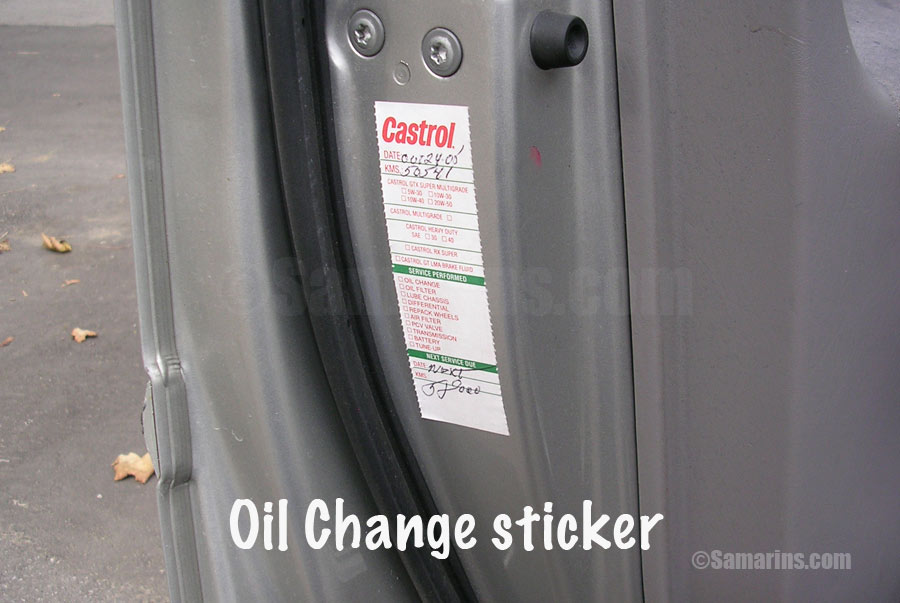 An oil change sticker may shed some light on the maintenance history. An oil change sticker may shed some light on the maintenance history. Watch out for musty smells from the vents. A burnt oil smell from the vents indicates possible oil leaks in the engine compartment. An antifreeze (coolant) smell is a sign of a coolant leaks. Leaks are signs of problems, it's best to avoid a car. If the vehicle has a separate HVAC system for rear-seat passengers, test it too. Test all the blower motor (fan) speed settings. Does the heater provide good heat? Avoid the car if the heater works well while driving, but the air from the vents becomes cool when the car is stopped with the engine running at idle. It's a sign that there are air pockets in the cooling system and this could potentially be an indication of engine problems. If there is an oil sticker, check what it says; it may provide some info on previous maintenance. |
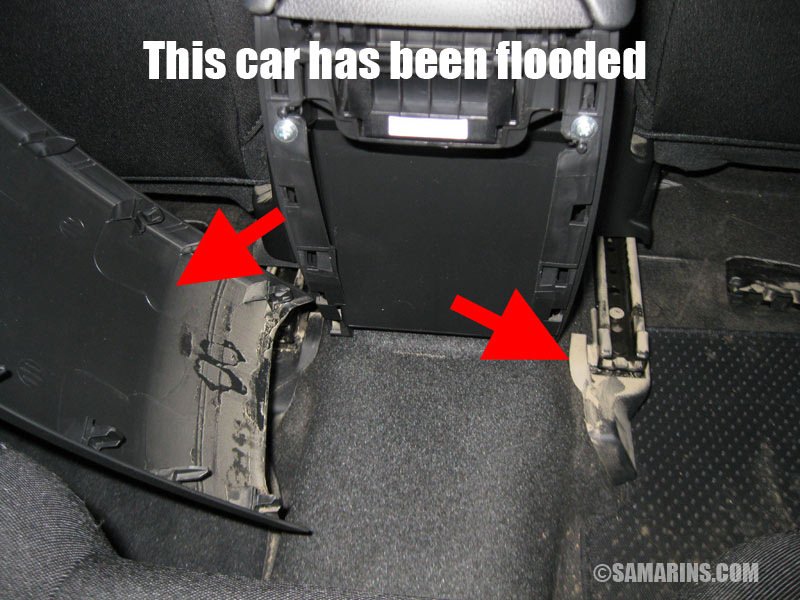
Watch out for signs of flood damage
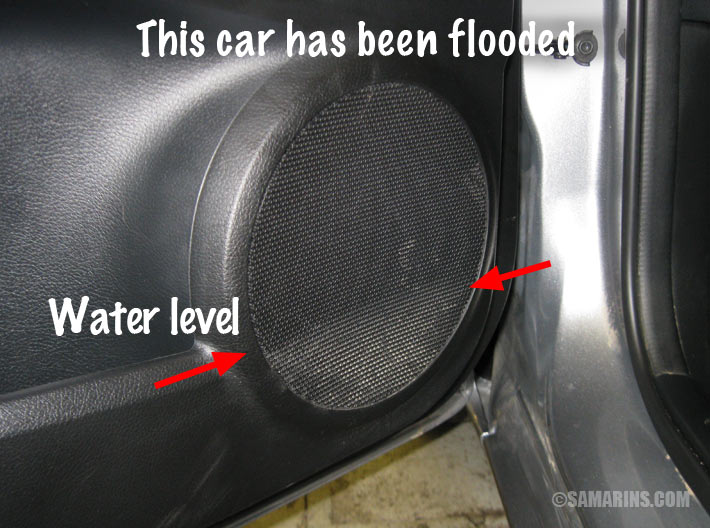 This car has been flooded. You can see the water level mark in the speaker cover. Photo 2. This car has been flooded. You can see the water level mark in the speaker cover. Photo 2.The car in the photo has been flooded. You can still see the dirty water level mark in the speaker cover; see photo 2. Look for signs of moisture under the carpet. Check the trunk and the spare tire well for signs of water damage. |
Does the car have a second key, owner's manual, spare tire kit?
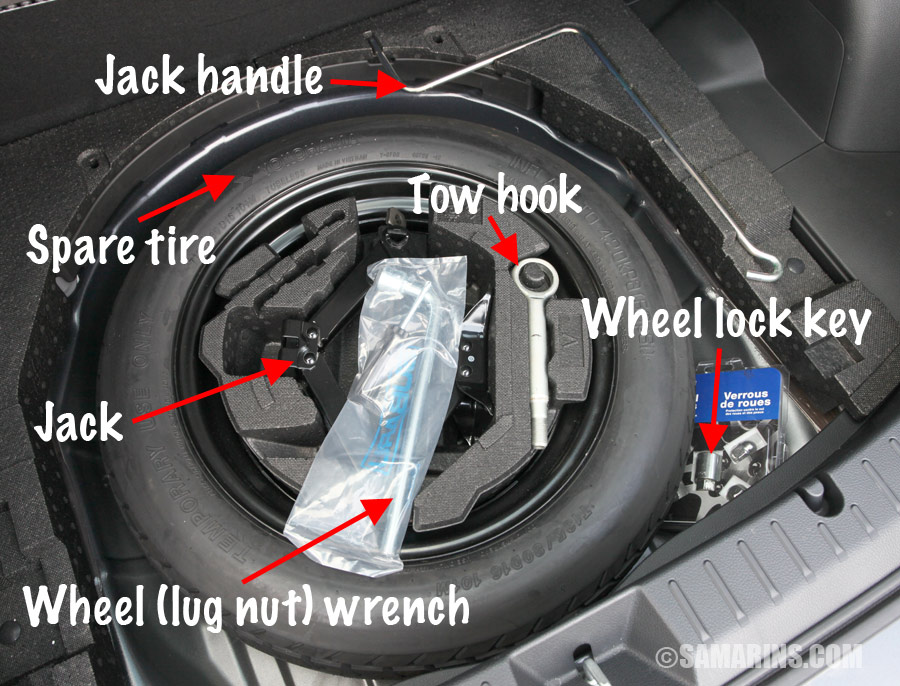 Check if the wheel lock key and the tools to change a tire are present. Check if the wheel lock key and the tools to change a tire are present.Check if the car has a good spare tire and a working jack. If the wheels have wheel locks installed, make sure there is a wheel lock key. |
If the spare tire is secured underneath, does the lowering mechanism work?
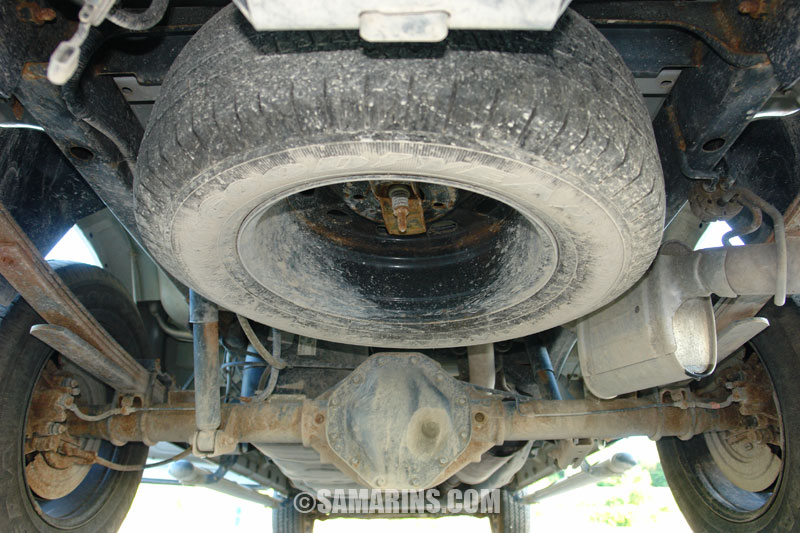 This truck has a spare tire secured underneath. This truck has a spare tire secured underneath. |
Test drive
There are many problems that you can find during a test drive. Test drive for as long as possible to be able to assess the driving characteristics of a vehicle. It's not uncommon for used car buyers to request a second test drive before signing a contract. We wrote a separate post: Signs of automatic transmission problems when test driving a used car.Pre-purchase inspection
We recommend having the vehicle properly inspected by a knowledgeable mechanic before purchase. There are many components that can only be inspected when the car is lifted on the hoist. An important question for any used car in the Rust Belt and Canada is how bad is the rust damage underneath and has the vehicle been rust proofed?How to get the vehicle inspected in a shop? Many used car buyers arrange to have a pre-purchase inspection done by a local mechanic or new car dealer specializing in that brand. It may cost from $75 to $150.
If possible, speak directly to the technician doing the inspection for the explanation of any findings and for general opinion on the car. You might also be able to find a used car inspector who can inspect the car on the spot.
Before signing the contract
Discuss any issues that need to be addressed before signing the contract. For example, if there are scratches or other minor damage, discuss if the dealer can repair it or reduce the price.If the car needs new tires, discuss in detail what kind of tires will be installed: cheap ones or from a reputable brand? If there is only one key, will the dealer provide the second key? It's best to do this in writing; verbal promises are just that, verbal promises. The same goes for warranty, check the contract and see what is covered.
Read Next:
Signs of automatic transmission problems when test driving a used car
Pros and Cons of a Manual Transmission: What to watch out when buying a used car with a manual transmission
Buying a Used Car: 10 Common Mistakes to Avoid
Pros and cons of turbo engines
Pros and Cons of a CVT transmission
What mileage is OK for a used car?
Signs of a collision repair, rust or paint job when buying a used car
How to check an engine when buying a used car
Reviews of popular used cars including problems to watch out for
Reviews of popular used SUVs
Signs of automatic transmission problems when test driving a used car
Pros and Cons of a Manual Transmission: What to watch out when buying a used car with a manual transmission
Buying a Used Car: 10 Common Mistakes to Avoid
Pros and cons of turbo engines
Pros and Cons of a CVT transmission
What mileage is OK for a used car?
Signs of a collision repair, rust or paint job when buying a used car
How to check an engine when buying a used car
Reviews of popular used cars including problems to watch out for
Reviews of popular used SUVs

 © Samarins.com 2000–2024. All rights reserved.