Ford Explorer 2006-2010: Pros and Cons, Problems
By Vlad Samarin Updated: January 09, 2024
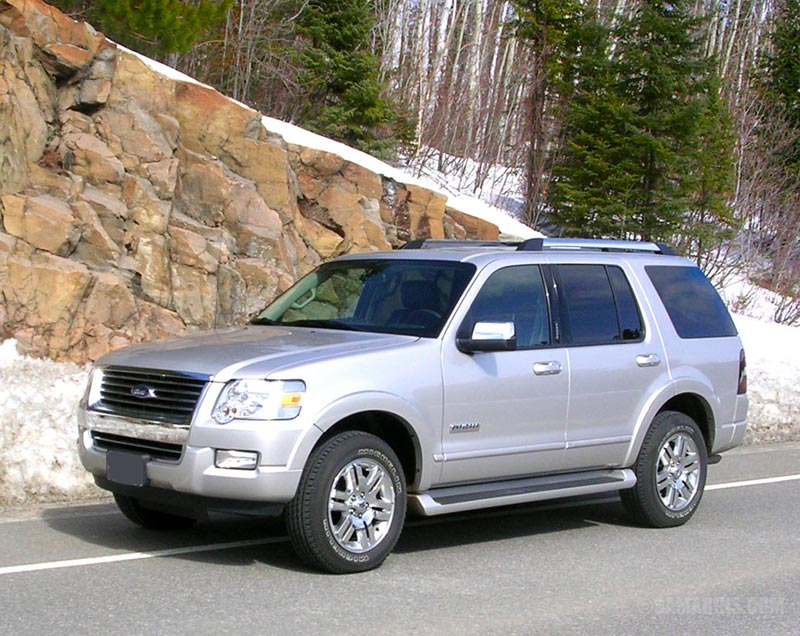 2006 Ford Explorer.
 Is a used Ford Explorer a good choice? How is the reliability and what are the reported problems?
Pros:
- Off-Road Capability: The Ford Explorer is known for its strong off-road capabilities, making it suitable for adventurous driving conditions.
- Spacious Interior: The Explorer offers a spacious and versatile interior with three rows of seating, providing ample room for passengers and cargo.
- Towing Capacity: With its sturdy build, the Explorer often has a higher towing capacity compared to some other midsize SUVs in its class.
- Strong Engines: Both the V6 and V8 offer plenty of power for towing and good acceleration.
- Body-on-Frame Construction: The Explorer's body-on-frame construction contributes to its durability and capability, especially for off-road and towing purposes.
- Comfortable Driving Experience: The Explorer is a pleasure to drive with plenty of horses under the hood and smooth ride.
Cons:
- Fuel Efficiency: The Explorer's fuel efficiency is lower compared to some other midsize SUVs.
- Handling: Due to its truck-based design, the Explorer has less nimble and responsive handling compared to car-based SUVs.
- Interior Quality: While spacious, the interior materials and design may feel less refined compared to some competitors.
- Reliability Concerns: Problems with the transmission, engine cooling system and and various electrical components can be expensive to repair.
- Resale Value: Due to its reputation and market trends, the Explorer might have lower resale value compared to some competitors in the midsize SUV segment.
Problems:
Many reported problems are related to the engine cooling system. One of the often reported problems is a leaking thermostat housing in a 4.0L SOHC V6. It's a plastic part located in the front portion of the engine. Symptoms include a coolant smell coming from the engine, low coolant level, overheating and, sometimes, a lack of heat from the vents. Watch these videos describing the problem.Replacing the thermostat housing in a shop will cost 2.0-3.0 hours of labor plus the parts and coolant. The part is not very expensive; it's best to use a genuine Ford part as we found reports that some aftermarket parts were leaking again after the replacement. The sensor O-rings are typically replaced at the same time.
A bad radiator is another possible source of coolant leaks and overheating. Radiator failures are fairly common. Replacing the radiator in a repair shop will cost 2.6-3.5 hours of labor plus the part.
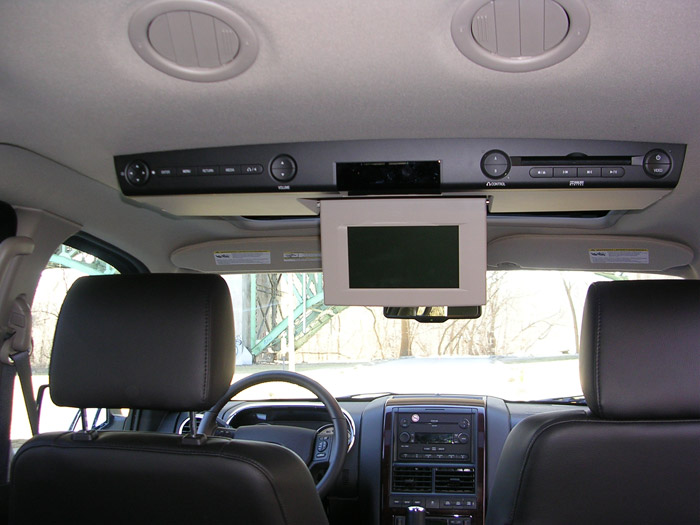
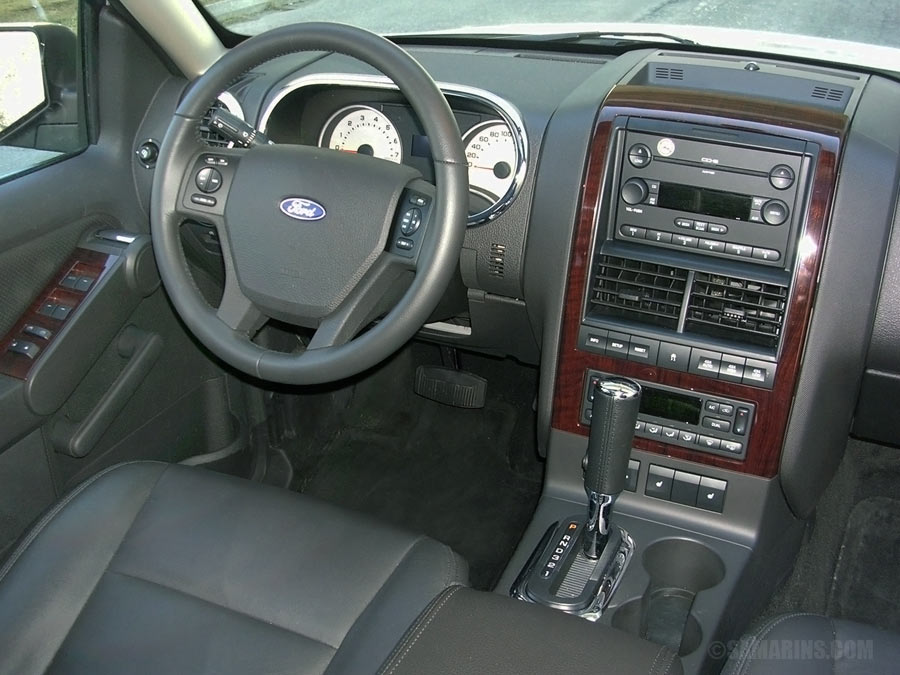 Ford Explorer 2006 interior.
 Given the cooling system problems, it's a good idea to check the engine coolant level regularly and have the cooling system test done if the level is very low or the engine overheats or leaks are suspected.
A bad EGR valve is a common cause for the Check Engine light with the code P0401. Of course, other parts of the EGR system must be checked. Replacing the EGR valve is a fairly easy job.
Failed ignition coils and spark plugs are fairly common to cause a misfiring in the 4.6L V8 engine. If the spark plugs are old, it's a good idea to replace all the spark plugs at the same time.
A portion of the harmonic balancer (main crankshaft pulley in front of the engine) in the 4.0L engine could separate causing a variety of problems with the belt (squeaking, chirping, etc.) and even a no-start. This Youtube video shows the repair.
Advertisement
The automatic transmission is another trouble spot, especially in the earlier model years of this generation. There are many reports that the transmission needed to be repaired/rebuilt or replaced, which is an expensive repair. Some of the transmission problems may require only a minor repair if caught earlier. We found several videos describing transmission problems.
Other common problems include a bad rear wiper motor, axle seal leaks, noisy wheel bearings, bad blend door actuators and some electrical issues.
Overall, the 2006 model year got the most of the complaints. As of January 2022, Consumer Reports rates the 2007 Explorer as 'average' for the reliability; the 2006, 2008 and 2010 Explorer are rated 'below average', the 2009 Explorer is not rated.
Related reviews:
Dodge Journey 2009-2019
Subaru Outback 2005-2009
Jeep Patriot
Toyota Highlander 2008-2013
Mazda CX-9 2007-2015
Ford Escape 2008-2012
Ford Edge 2007-2014
Summary:
The 2006-2010 Ford Explorer is a great body-on-frame truck with strong towing capability. It can last for over 200,000 miles, but at this age, it will be quite expensive to keep on the road. Various leaks, radiator failures, transmission problems and electrical issues are not uncommon. It's also not very fuel-efficient. If you want something more reliable, check out Toyota SUVs.What to watch out for when buying a Ford Explorer: When inspecting the truck, watch out for a low engine coolant level and coolant leaks from the radiator and thermostat housing. Check if the CD/DVD players work. Test all the heater and air conditioner modes. A lack of heat at idle indicates a problem with the cooling system.
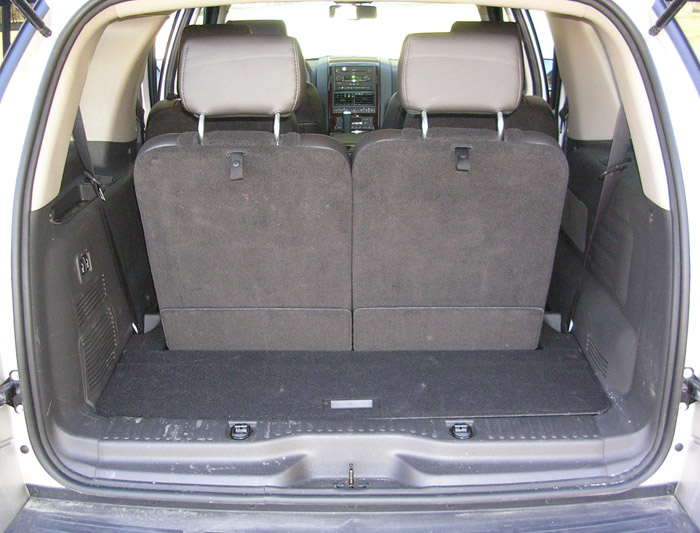
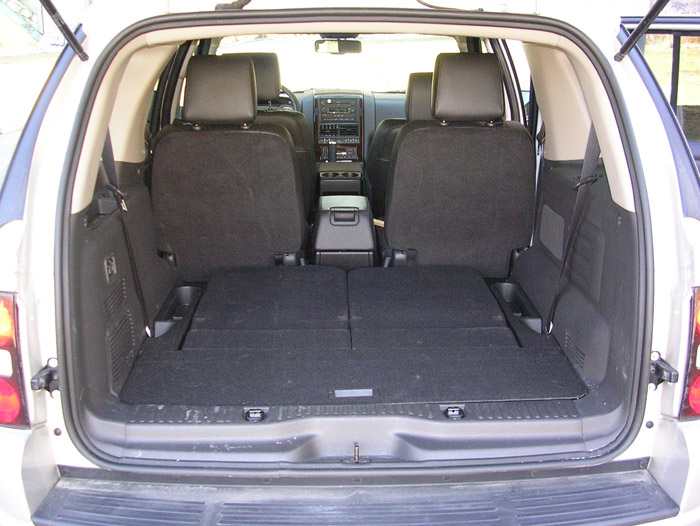
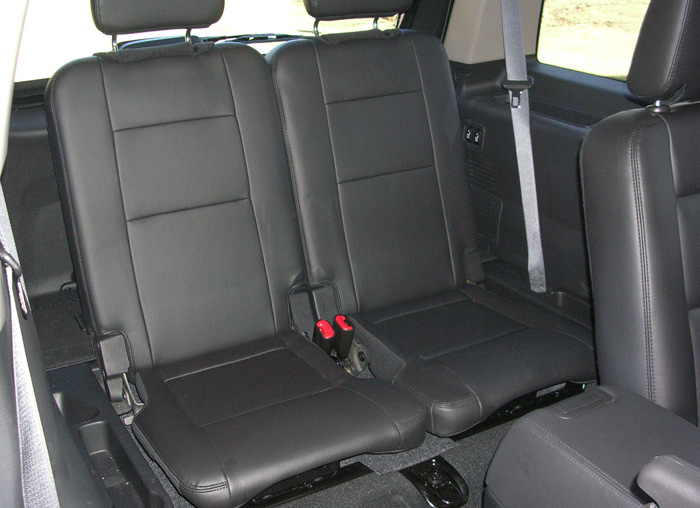 Ford Explorer third row seat.
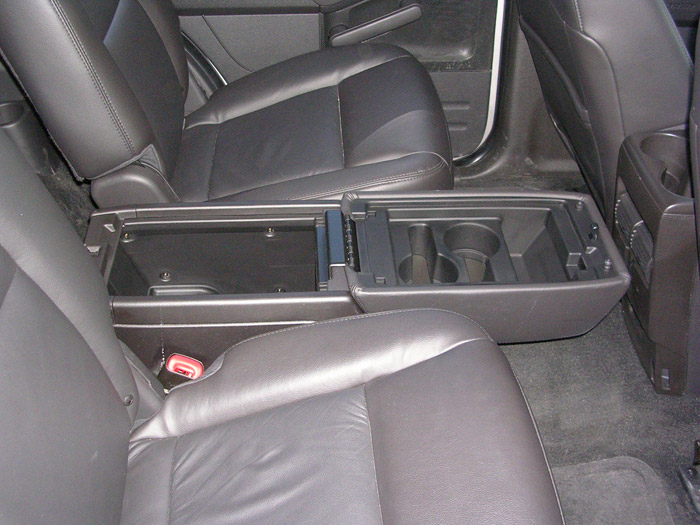
 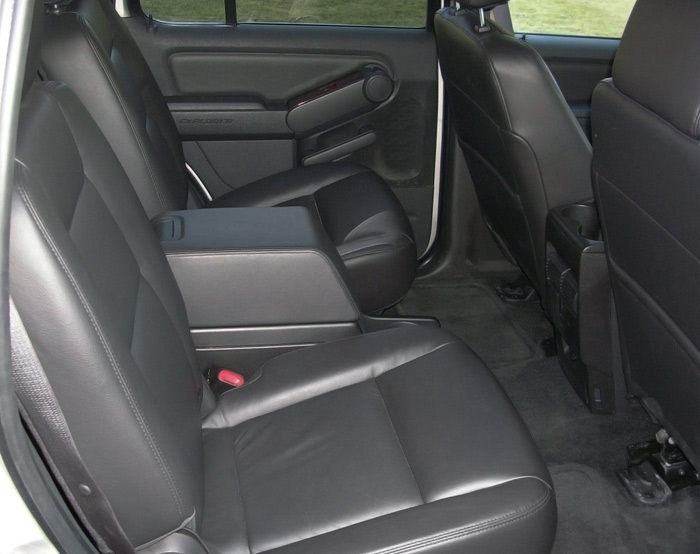 Ford Explorer second row seats.
 During the test drive, pay attention to the way the transmission shifts; there should be no slipping, jerks or jolts; all shifts should be smooth. There should be no clunk when coming to a stop. Also, avoid the truck if you notice a hesitation or delayed engagement when shifted into Reverse.
Watch out for noises from the drivetrain and suspension. A humming or growling noise and looseness in the front end could be caused by a bad front wheel bearing. Before signing the contract, have the truck inspected by an independent mechanic familiar with Ford products. Ask to test the transmission and 4WD system. Read also: What mileage is OK for a used car?
Mechanical: The Explorer comes as a rear- or four-wheel drive, with an independent front and rear suspension. Powertrain choices include a V6 with a five-speed automatic or a V8 with a six-speed automatic. The base 210-hp 4.0L SOHC V6 is more than adequate for daily driving.
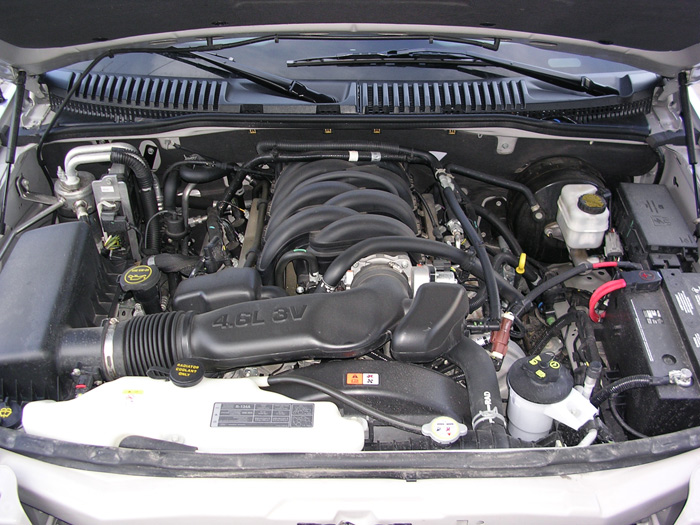 Ford Explorer 4.6L engine
 Fuel Economy: The EPA rates both the V6 and V8 4WD 2007 Explorer at 13/18 mpg (18.1/13.1 L/100 km) city/highway. That's about average for a truck of this size. On a highway trip, the 4WD Explorer can travel up to 344 miles (554 km) on a full tank (22.5 US gallons or 85.2 liters). The 2008-2010 V6 4WD Explorer is rated at 13/19 mpg city/highway (15 mpg combined).
Safety: Antilock brakes and AdvanceTrac stability control system are standard. Side and side curtain airbags are available. Trailer Sway Control is standard from 2009. The 2006-2010 Ford Explorer received five out of five stars in the NHTSA front and side-impact crash tests, but only three out of five stars in rollover tests.
Interior: The 5- and 7-passenger models have a bench seat in the second row. The 6-passenger Explorer comes with second-row bucket seats and a large fold-out center console.
Seats are comfortable. Second- and third-row seats fold flat. Third-row seats are low to the floor and have thin padding, but the head- and legroom are not bad. The liftgate glass opens separately. Available features include power-adjustable pedals, rear climate controls, rear DVD and power folding third-row seats.
Maintenance: Have the oil changes done at recommended intervals to keep the engine in good shape. Check the coolant level regularly and have a cooling system tested if the engine overheats or leaks are suspected.
The Explorer is a tall, heavy SUV with a high center of gravity. This type of vehicle has higher rollover rates, especially with a heavy load, so good tires as well as the proper tire pressure are very important. Check tire pressure regularly. Incorrect tire pressure can also cause problems with the 4WD system and the ABS. For the same reason, it's also important to have all four tires of the same brand and size.
If you have concerns with the way the transmission shifts, have it checked out before it gets worse. Some problems, if caught early, can be less expensive to repair.
If your truck needs a new ignition coil, it's a good idea to replace all the spark plugs as well. At least once a year, have your truck inspected in a repair shop where it can be lifted on the hoist, to keep it safe.
Engine oil capacity:
4.0L V6: 5.0 US qt. (4.7 liters)
4.6L V8: 6.0 US qt. (5.7 liters)
Photos:
 © Samarins.com 2000–2024. All rights reserved.