Toyota Corolla 1998-2008: problems, engine, fuel economy, pros and cons, photos
Updated: July 09, 2022
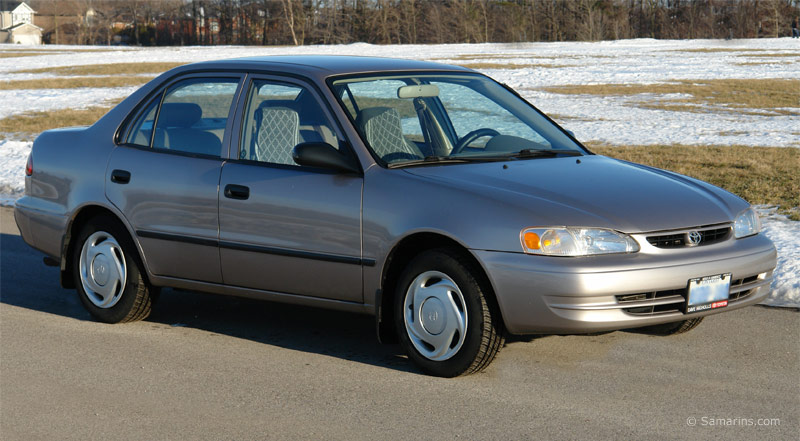 2000 Toyota Corolla.
 The 1998-2002 Corolla (8th gen.) handles comfortably and offers a smooth and quiet ride.
The 2003-2008 Corolla (9th gen.) is a bit longer and taller, but mechanically it's not much different. It retained the same base 1.8L engine and other components.
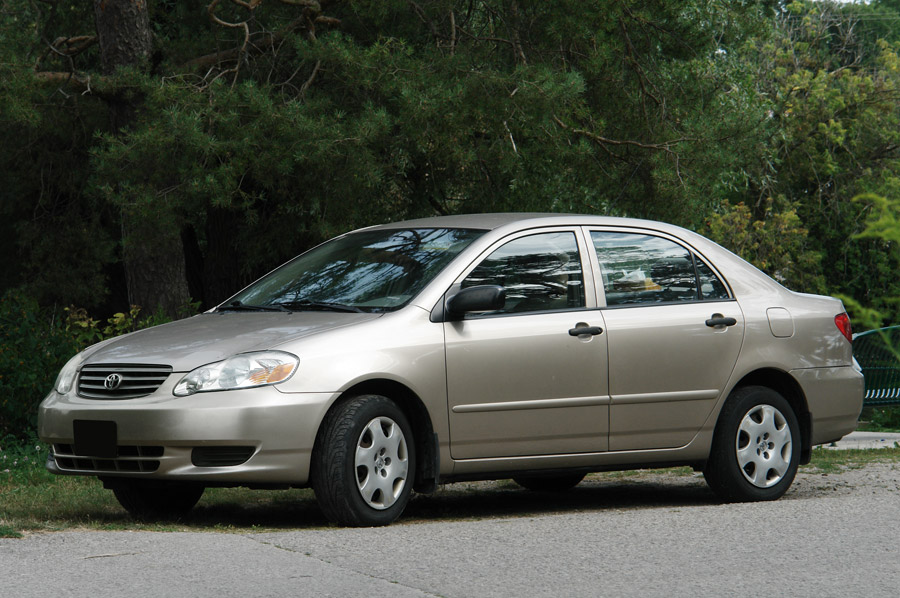 2008 Toyota Corolla.
 The 1998-2008 Corolla can work as a dependable commuter if you can find one that is not too rusted. With good care, this car can easily last for over 300K miles. What are the common problems that Corolla owners report?
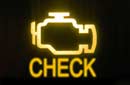
1998-2008 Toyota Corolla Reported Problems: The Check Engine light with the trouble code P0171 is commonly caused by a failed or dirty mass airflow sensor. Symptoms include stalling and lack of power. Some owners reported that cleaning the sensor solved the problem, others said the sensor had to be replaced. The part is not very expensive and is easy to replace. We found many Youtube videos on this issue.
The codes P0440, P0456 and P0446 can be caused by a bad gas cap or a leak at the EVAP canister. Mechanics do an EVAP system leak test to pinpoint the part that needs to be replaced.
A failed starter motor can cause the engine not to start. When turning the ignition key, you might hear a single click or nothing at all.
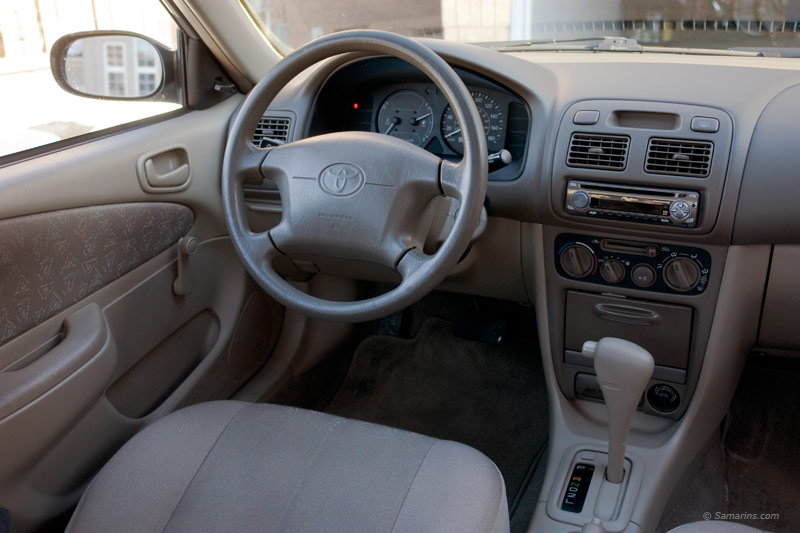 2000 Toyota Corolla interior.
 If the battery is OK, mechanics test the voltage at the starter motor control terminal. If there is 12 Volt when turning the key to start, but the starter won't crank, it's bad and must be replaced or rebuilt. Replacing a starter motor is also not very difficult (0.8-1.0 hour of labor plus the part).
Oil leaks are often reported. One common source of oil leaks is the valve cover gasket. The part is not expensive and is not very difficult to replace (0.8-1.0 hours of labor in the shop). Watch these videos describing the repair. If your spark plugs are old, it's a good idea to replace them at the same time, as some of the labor overlaps.
Advertisement
Another source of the oil leaks is the timing chain tensioner at the back of the timing chain cover. It might need a new gasket or can simply be resealed. It's a fairly simple job (watch these videos), but the timing chain tensioner needs special care when handling.
The drive belt tensioner is another trouble spot. The noisy bearing in the pulley of the tensioner can cause a squeaking noise from the drive belt area. The tensioner itself can go bad and cause a rattling/chattering noise from the belt side of the engine. Sometimes this noise is more noticeable on acceleration.
The tensioner pulley can be replaced separately, but many owners simply replace the tensioner assembly. The part cost from $95 to $220 and takes 0.8-1.0 hour of labor to replace in the shop. The drive belt is typically replaced at the same time. Watch these videos to hear tensioner noises.
Exhaust leaks are very common. Whether it's a flex pipe or a flange, check with a local muffler repair shop as they can weld/fabricate exhaust parts on the spot.
Check for recalls at the NHTSA website.
1998-2008 Toyota Corolla Engine:
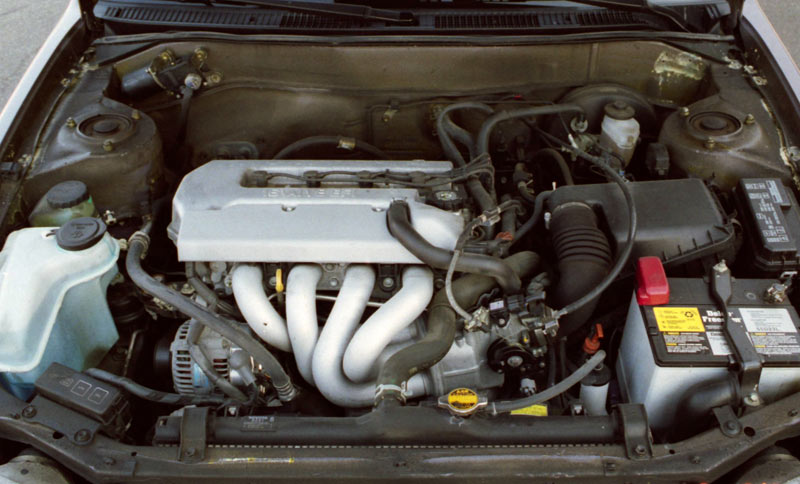 1ZZ-FE engine in the 2000 Toyota Corolla.
 The 2005-2006 Corolla XRS features the VVTL-i version of the 1.8-liter engine (2ZZ-GE) - the same as in the sporty Celica, with more high-end power achieved by variable valve lift. This means that at higher RPMs valves open wider, allowing the engine to "breath" better.
Timing belt or timing chain? The 1ZZ and 2ZZ engines have a timing chain. There is no timing belt.
Fuel Economy: The 2000 Corolla automatic delivers 25/34 mpg city/highway. The 2001 Corolla is rated at 26/36 mpg city/highway. The 2005-2008 Corolla with a 4-speed automatic transmission is rated at 26/35 mpg city/highway, which means that on one tank of gas it's expected to travel for 383 miles (616 km).
Is the 1998-2008 Toyota Corolla a good car to buy? If a simple commuter is all you need, the Corolla will do well. It's cheap on gas and won't cost a lot to keep it running. If the body is in a good shape, the high mileage is not a big deal. Even if the engine or the transmission will need to be replaced, it won't be too difficult to find a used part and any local shop can do the swap for a reasonable price.
The downside is that anti-lock brakes and side airbags are optional. As of May 2022, Consumer Reports rates the 2003-2008 Corolla's reliability as 'above average'.
Pros: Reliability, smooth ride, fuel economy, won't cost a lot to maintain/repair, availability of used parts, simple non-turbo engine, easy to work on DIY, rear drum brakes can last long, cheaper small-size tires, holds its value well, easy to sell.
Cons: Basic interior, the engine is noisy on acceleration, anti-lock brakes are not standard, lack of driver's seat adjustments, lack of headroom in models with a sunroof.
As it's a very popular model, the Corolla is also easy to sell. The Toyota Matrix and Pontiac Vibe are very similar cars and can be considered as alternatives.
Related reviews:
Honda Civic 2001-2005
Honda Civic 2006-2011
Toyota Camry 2002-2006
Toyota Camry 2007-2011
Toyota Matrix 2003-2008
Toyota Matrix 2009-2014
Pontiac Vibe 2003-2010
Mazda 3 2004-2009
Mazda 3 2010-2013
Toyota Corolla 2009-2013
What to look for when buying the 1998-2008 Toyota Corolla? The model with anti-lock brakes is preferred. Given the age, the car must be checked carefully from underneath for rust damage, as the body panels, brake lines and other parts could be rusted, especially if the car comes from the Salt Belt. Watch out for leaking struts. Test the A/C and other electric features. When test-driving, try driving slowly on a rough road and watch out for knocking/rattling from the steering or suspension. Loud clicking when turning is a sign of a bad CV joints. Read more: How to inspect a used car - illustrated guide.
A blue smoke from the exhaust or a loud rattle when the car is started are the signs of a bad engine. If the transmission fluid on the dipstick is too dirty, the transmission is probably worn out. The transmission should shift smoothly during the test drive. Read more: Signs of automatic transmission problems when test driving a used car.
The 1.8L engine is known to consume oil at higher mileage, which means the oil level needs to be checked regularly and topped up if needed. The transmission fluid also needs to be changed when dirty or every 60K miles.
Engine Oil Capacity (Drain and Refill with filter) 1998-2004 Toyota Corolla, 1.8L engine: 3.7 liters or 3.9 quarts.
2005-2008 Toyota Corolla (except XRS) 1.8L engine: 4.2 liters or 4.4 quarts.
2005-2006 Toyota Corolla XRS, 1.8L engine: 4.5 liters, 4.8 quarts.
 © Samarins.com 2000–2024. All rights reserved.